Eric Cato
Fine Art Photography
Artist's Statement
Since 1910, abstract imagery has been seen as the domain of painting by much of the art world. In fact, a number of prominent photographers—Paul Strand, Alfred Stieglitz, Man Ray, Brassaï—were making abstract photographs more than a century ago. The first intentionally abstract photograph was made in 1916—six years after the first abstract painting.
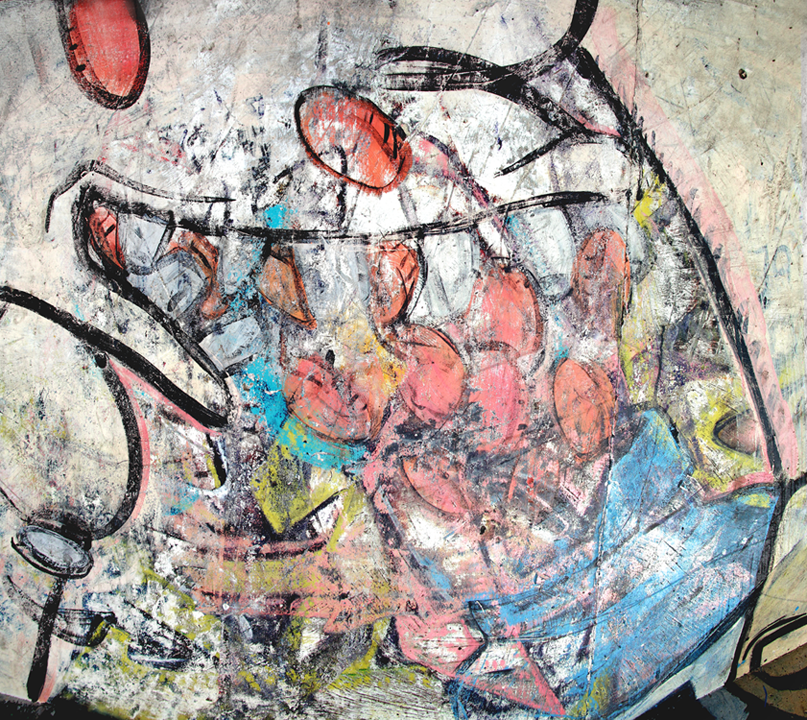
My photographs are of weathered surfaces, graffiti, and random paint found on walls, lampposts, and doors in the streets of Brooklyn, New York, Los Angeles, and Medellín, among others.
In the process of photographing a surface and eliminating any reference to its physical context or size, it is abstracted and transformed into something that exists in an intangible realm of color, composition, shape, and mood. When printed, the image is transformed anew into physical form—a photographic print of a found object.
The phrase objêt trouvé (found object) describes an object—which is not normally considered material from which art is made—found by an artist, which, with minimal modification, is then presented as a work of art. I see my photographs in the Objêt Trouvé tradition that began to emerge in France and Germany in the years just before and after WW1. Picasso is believed to be the first artist to utilize the idea when he used an image of chair caning printed on oilcloth in his collage, Still Life with Chair Caning, in 1912. In Germany after the war, Kurt Schwitters asserted that common materials, such as newsprint, fabric, and discarded wire mesh, were as valid in making fine art as oil paint or marble. In France, Marcel Duchamp exhibited a porcelain urinal to challenge the Academe’s arbitrary constraints on creativity. Brassaï, the Hungarian photographer, published images of graffiti he’d found in the streets of Paris in 1933 and called them ‘les objêts trouvé’.
While I use a camera to make the images, I believe the final work is what matters, not whether it’s a painting, a collage, or a photograph. I make images of commonplace and consequently “invisible” surfaces as a means of exploring the alchemy of imagination.